3d Rendered Scientist Set: A Versatile Resource for Design and Scientific Visualization
The 3d Rendered Scientist Set is a comprehensive collection of high-quality digital assets designed to support a wide range of scientific and design projects. This set includes detailed 3D models of laboratory equipment, molecular structures, and other scientific tools, making it an invaluable resource for professionals in fields such as biology, chemistry, and medical research. Each item is rendered with precision and realism, ensuring that the final output meets the highest standards of visual quality.
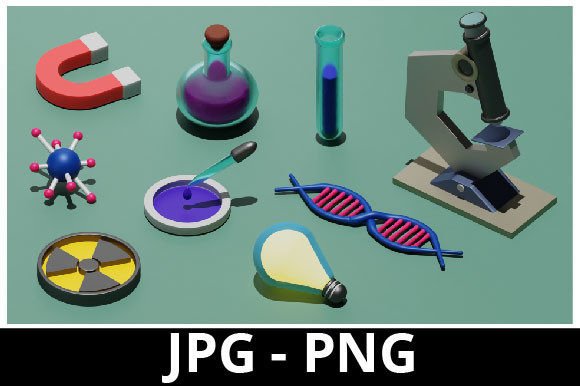
What sets the 3d Rendered Scientist Set apart from other similar resources is its attention to detail and versatility. The set includes a variety of elements such as microscopes, test tubes, DNA strands, and biohazard symbols, all of which can be used in different contexts. Whether you're creating a presentation, designing a website, or developing educational materials, the 3d Rendered Scientist Set offers a broad range of options to suit your needs.
Understanding the Components of the 3d Rendered Scientist Set
The 3d Rendered Scientist Set consists of multiple components that are essential for scientific visualization. These include items like the microscope, which is a fundamental tool in many laboratories. The microscope model in this set is highly detailed, capturing the intricate features of the instrument. This level of detail allows users to create accurate representations that can be used in educational or professional settings.
Another key component is the DNA model, which is crucial for illustrating genetic concepts. The 3d Rendered Scientist Set provides a realistic depiction of DNA molecules, making it easier to visualize complex structures and processes. This can be particularly useful for educators who want to explain genetics to students or for researchers presenting their findings.
In addition to these core elements, the set also includes various other items such as lab equipment, chemical formulas, and molecular structures. These components are designed to be easily integrated into different projects, allowing users to create cohesive and visually appealing content. The availability of multiple file formats, including JPG and PNG, ensures that the assets can be used across a wide range of platforms and applications.
Comparing the 3d Rendered Scientist Set with Other Options
When considering the 3d Rendered Scientist Set, it's important to evaluate how it compares with other available resources. One of the main advantages of this set is its focus on scientific accuracy and visual quality. While there are other 3D rendering tools and asset libraries available, many lack the level of detail and specificity found in the 3d Rendered Scientist Set.
For instance, some generic 3D model repositories may offer a wide array of objects, but they often lack the specialized scientific elements that are critical for certain projects. In contrast, the 3d Rendered Scientist Set is tailored to meet the needs of those working in scientific fields, providing a more targeted and relevant selection of assets.
Additionally, the 3d Rendered Scientist Set offers a practical approach to design and visualization. Unlike some alternatives that require extensive customization or technical expertise, this set is designed to be user-friendly. The included files are ready to use, allowing designers and researchers to quickly incorporate the assets into their work without the need for additional software or training.
Strengths and Tradeoffs of the 3d Rendered Scientist Set
The 3d Rendered Scientist Set has several strengths that make it a valuable resource for various applications. One of the primary benefits is its high level of detail and realism. This makes the assets suitable for both professional and educational purposes, where accuracy is essential. The set also offers a diverse range of elements, providing flexibility for different types of projects.
However, there are also tradeoffs to consider. For example, while the set includes a wide variety of scientific elements, it may not cover every possible scenario or requirement. Users may find that they need additional assets or customizations for specific projects. In such cases, it may be necessary to seek out other resources or collaborate with designers to enhance the existing materials.
Another consideration is the file format and compatibility. While the 3d Rendered Scientist Set includes common formats like JPG and PNG, users should ensure that these files are compatible with their intended applications. Some projects may require more advanced file types or specific software, which could limit the usefulness of the set in certain situations.
Best Fit Situations for the 3d Rendered Scientist Set
The 3d Rendered Scientist Set is particularly well-suited for projects that require accurate and detailed scientific visualization. It is ideal for educational materials, such as textbooks, presentations, and online courses, where clear and realistic images are essential for conveying complex concepts. The set can also be used in marketing and promotional materials for scientific organizations, helping to communicate the importance of research and innovation.
For designers and developers, the 3d Rendered Scientist Set offers a convenient way to incorporate scientific elements into their work. Whether creating a website, a mobile application, or a digital brochure, the assets can be easily integrated to enhance the visual appeal and professionalism of the final product. The set's versatility makes it a practical choice for a wide range of creative projects.
Additionally, the 3d Rendered Scientist Set can be beneficial for researchers and scientists who need to present their findings in a clear and engaging manner. The high-quality images can help illustrate experiments, data, and theories, making it easier for audiences to understand and retain information. This can be particularly useful in academic settings or when communicating with stakeholders who may not have a scientific background.
When to Consider Alternatives to the 3d Rendered Scientist Set
While the 3d Rendered Scientist Set is a powerful resource, there may be situations where alternative options are more appropriate. For example, if a project requires highly customized or unique elements that are not included in the set, it may be necessary to explore other sources. In such cases, working with a professional designer or using specialized 3D modeling software could provide the desired results.
Moreover, if a project involves a specific industry or niche that is not well-represented in the 3d Rendered Scientist Set, users may need to look for more targeted resources. This could include industry-specific tools, proprietary databases, or collaborations with experts in the field. By considering these alternatives, users can ensure that their projects are well-equipped with the right assets and information.
Ultimately, the decision to use the 3d Rendered Scientist Set or an alternative depends on the specific needs and goals of the project. By carefully evaluating the strengths and limitations of each option, users can make informed choices that align with their requirements and objectives.
Practical Examples and Use Cases
The 3d Rendered Scientist Set has been successfully used in a variety of real-world scenarios. For instance, an educational institution might use the set to create interactive learning modules that help students grasp complex scientific concepts. The detailed models of microscopes and DNA strands can be incorporated into virtual labs, providing a hands-on experience that enhances understanding and engagement.
In the pharmaceutical industry, the 3d Rendered Scientist Set can be used to develop marketing materials that showcase new products and innovations. High-quality images of laboratory equipment and chemical structures can be used in brochures, websites, and presentations to convey the scientific rigor and reliability of the company's offerings. This can help build trust and credibility with potential clients and partners.
Additionally, the set can be utilized in scientific conferences and exhibitions to create visually striking displays that highlight research findings. The realistic renderings of scientific instruments and molecular structures can be used to attract attention and facilitate discussions among attendees. This can be particularly effective in promoting new discoveries and fostering collaboration within the scientific community.